1865
A walker 60 yards ahead
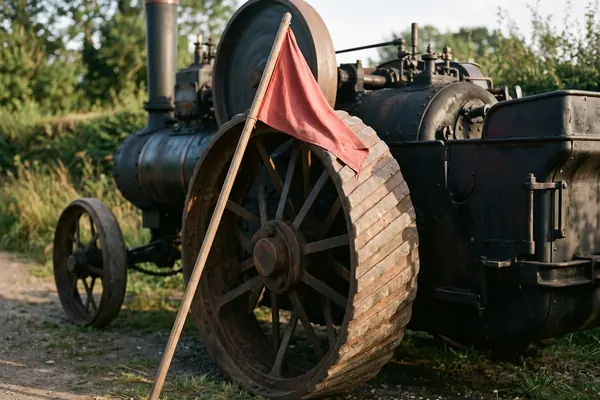
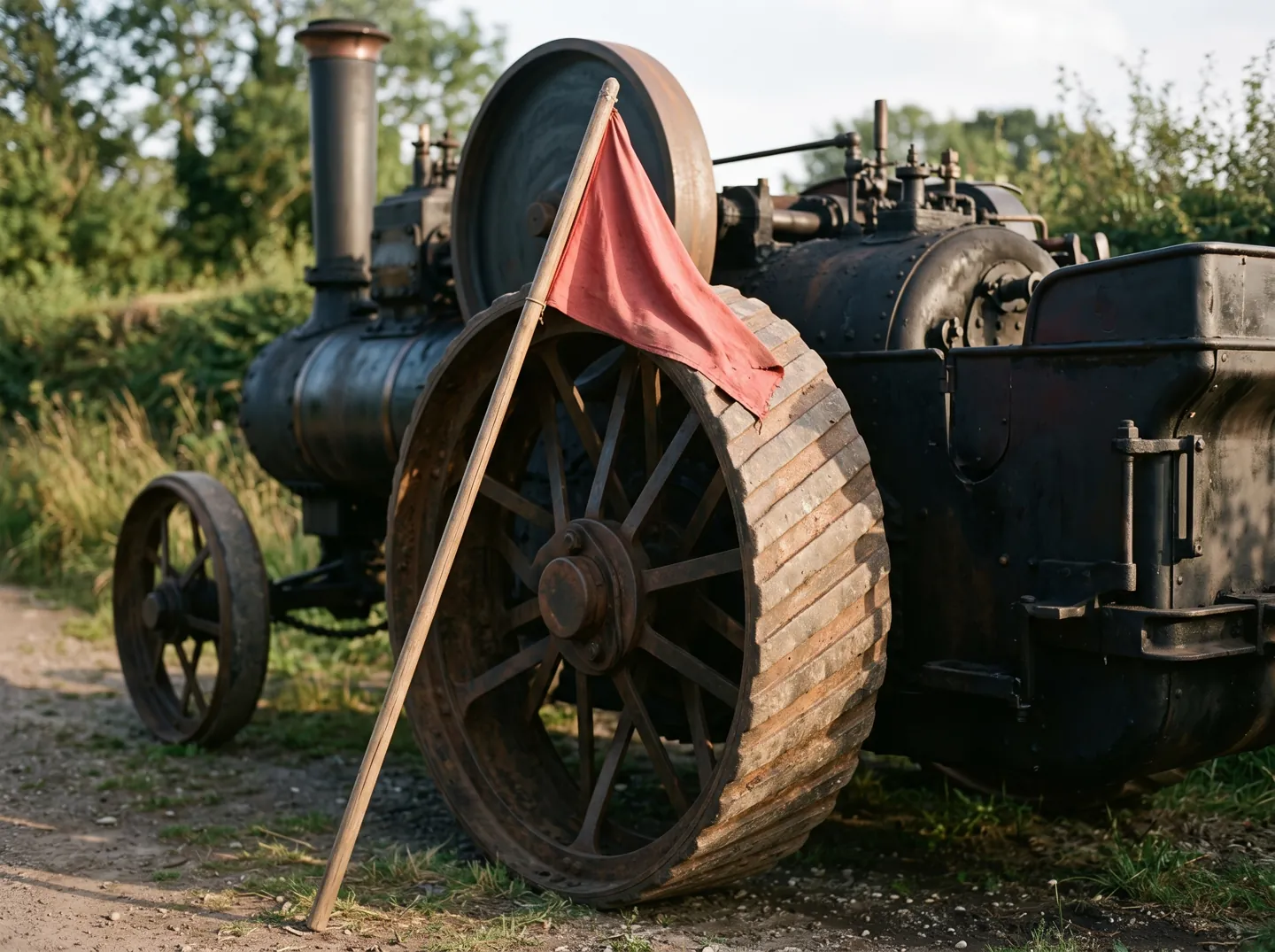
The Red Flag Act required a person waving a red flag to walk 60 yards ahead of a mechanically propelled vehicle to warn of its approach.
Pick a year doodlemotors
A SHORT HISTORY OF THE RULES
Early motorists in Britain crawled behind a walker.
4 MPH until 1896
4 → 14 mph Limit for light motor vehicles
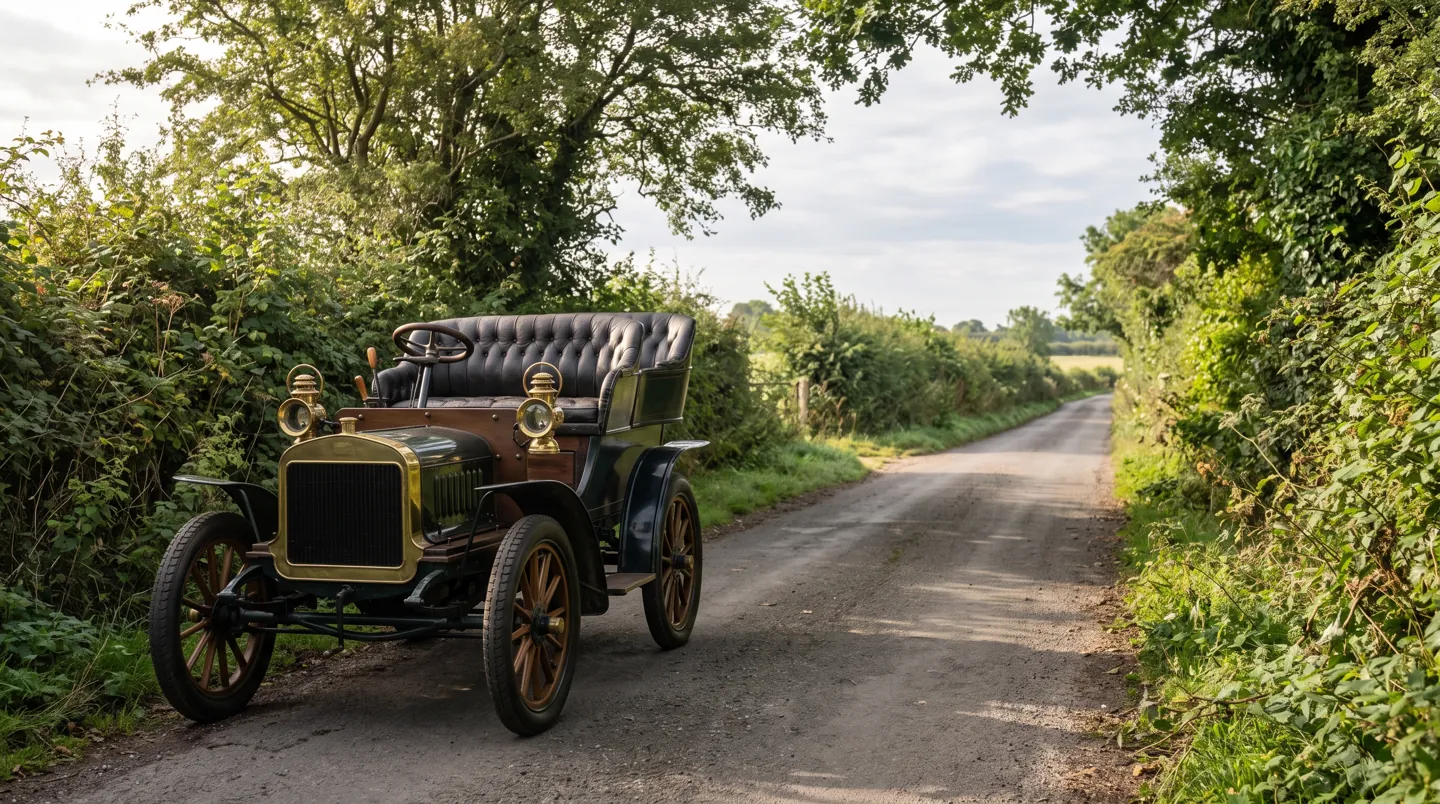
Until 1896 mechanically propelled vehicles were held to 4 mph, with someone on foot out in front. Then, in a few big steps, came faster limits, number plates, licences and finally a driving test.
THE SHORT ANSWER
Each new law loosened the speed limit
and added a new duty for drivers.
1865
The Red Flag Act required a person waving a red flag to walk 60 yards ahead of a mechanically propelled vehicle to warn of its approach.
Pick a year1896
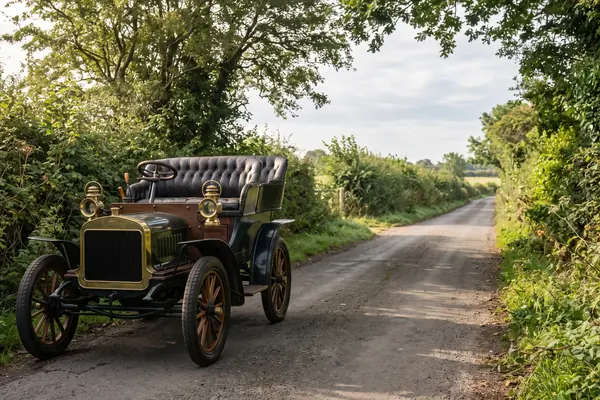
On 14 November 1896 the walker was abolished and the limit for light vehicles under 2 tons rose from 4 mph to 14 mph. Motorists celebrated with a run to Brighton.
See the numbers1903
The Motor Car Act made registration, number plates and driving licences compulsory from 1 January 1904, and raised the limit to 20 mph. There was still no test.
The later stepsA QUICK TIME TRAVEL
Pick a year to see what the law asked of a motorist then. The bar shows how much speed the limit allowed.
A simplified history of the main limits for light motor vehicles in Britain. Today's rules are in The Highway Code.
FOUR LATER MILESTONES
Once cars were legal and numbered, the next rules were about how people drove them.
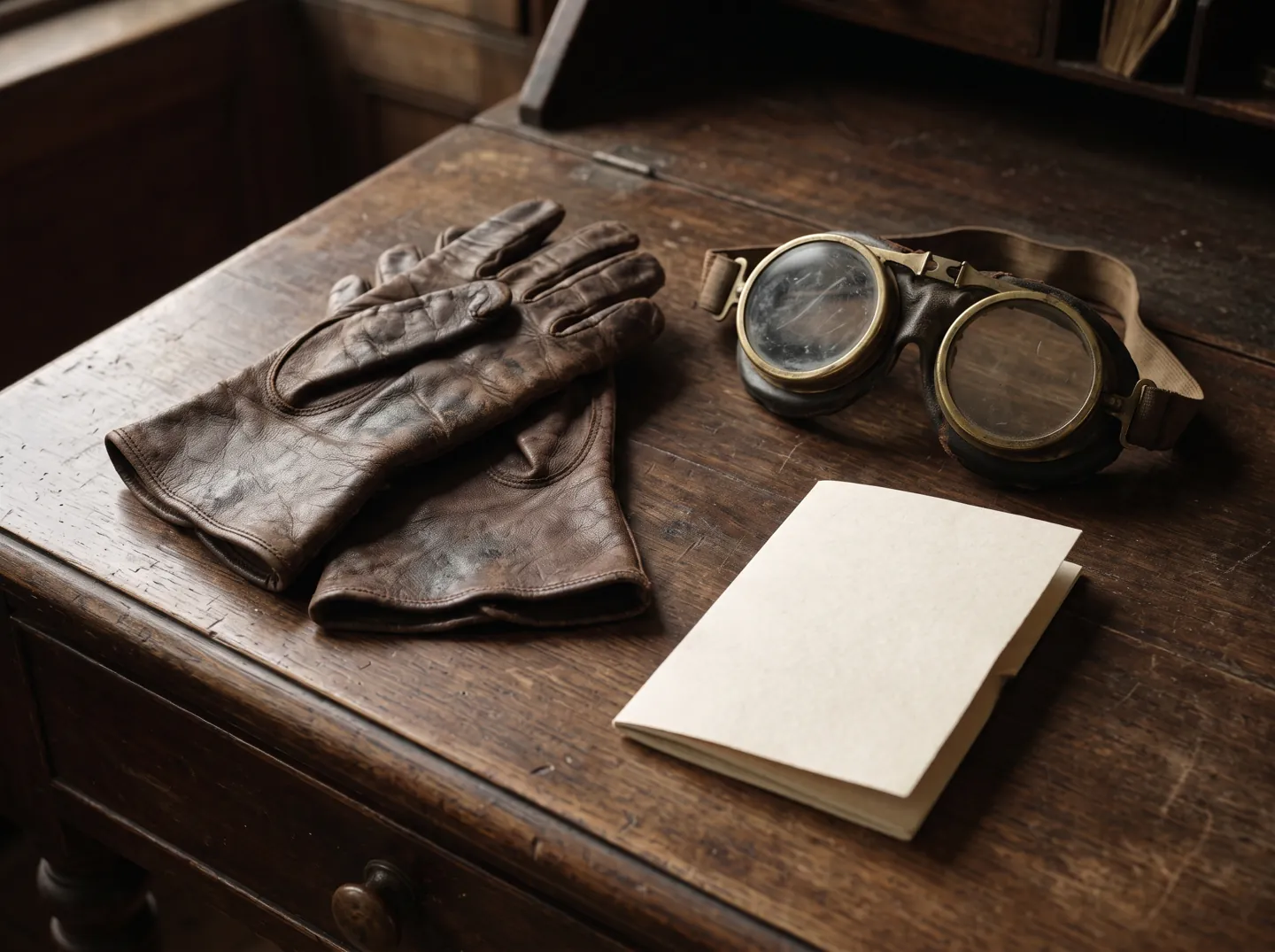
The first edition cost 1 old penny and advised drivers to sound the horn when overtaking; mirrors were not even mentioned.
Testing began on a voluntary basis to avoid a rush of candidates once it became compulsory. There were no test centres yet.
New drivers who had started on or after 1 April 1934 had to pass. The first person to pass paid 7s 6d (37.5p).
A separate theory test replaced the questions about The Highway Code asked during the practical test.
TWO NUMBERS WORTH KNOWING
One figure on the 1896 speed jump,
one on how quickly driving spread.
4 → 14 mph
Limit for light motor vehicles
The 1896 Act raised the limit for vehicles under 2 tons from 4 mph to 14 mph and ended the need for a person to walk ahead.
SPEED LIMIT · 1896
1 → 20 million
Drivers in Britain, 1921 to 1973
DVSA says there were only 1 million drivers in 1921 and 3 million by 1939. By 1973 there were about 20 million, and licensing moved onto a central computer.
DRIVERS · DVSA
DVSA notes that the first driving licence, bought over the counter at a Post Office, cost 5 shillings (25p), while registering a vehicle each year cost 20 shillings (£1).
THE RUN TO BRIGHTON
To mark the end of the walker rule on 14 November 1896, the Motor Car Club held the Emancipation Run: pioneering motorists drove about 60 miles from London to Brighton in the first legal run for motors in Great Britain.
Commemoration runs followed until the limit rose to 20 mph in 1903. The run was revived in 1927 and still takes place each November, open to cars built before 1 January 1905.
Questions
The Act of 1865 required a person waving a red flag to walk 60 yards ahead of a mechanically propelled vehicle to warn of its approach. Until 1896 the limit was 4 mph.
An Act of 1878 removed the need to carry a red flag and cut the walking distance to 20 yards. The walker was abolished altogether on 14 November 1896.
The Motor Car Act 1903, in force from 1 January 1904, made councils register every motor car and issue a unique number that had to be displayed. Driving without it was an offence.
No. From 1904 drivers needed a licence, bought for 5 shillings, but there was no test. Compulsory driving tests began on 1 June 1935.
It began as the Emancipation Run of 14 November 1896, celebrating the new 14 mph limit. Today it is held each November for cars built before 1905.
Updated
ABOUT THIS NAME
doodlemotors.com is part of the DoodleSale portfolio. It isn't in an auction right now, but you can ask about leasing it.